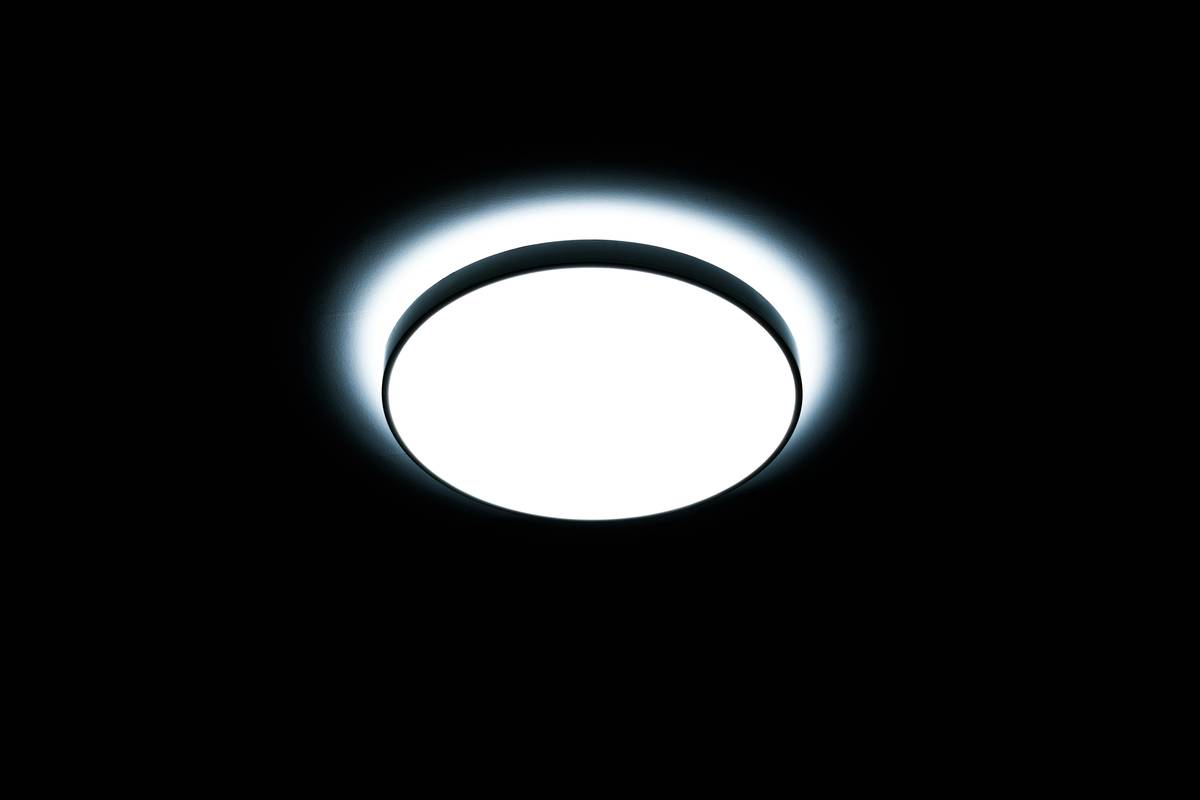
Ever walk into a friend’s newly renovated living room—and instantly feel like you’ve stepped into an MRI suite? No warmth. No ambiance. Just that flat, unblinking glare from their brand-new led flush ceiling lights modern installation? You’re not imagining it. I made this mistake myself in 2022—installed sleek, ultra-thin led flush ceiling lights modern fixtures in my dining nook thinking “minimalist = magical.” Instead, I got harsh shadows on faces during dinner, a 3 a.m. glare off the ceiling fan blades, and a spouse who refused to host guests until we ripped them out.
This guide cuts through the glossy brochures and influencer-led confusion. We’ll tackle how to select, install, and style led flush ceiling lights modern that genuinely elevate your space—not flatten its soul. You’ll learn practical fixes for common pitfalls, real data-backed performance thresholds, and why “flush” doesn’t mean “forgotten.”
Table of Contents
- Key Takeaways
- Why LED Flush Ceiling Lights Modern Matter in Home Improvement
- Step-by-Step Selection & Installation Guide
- 5 Best Practices (and One Terrible Tip to Avoid)
- Real-World Results: Before-and-After Case Studies
- Frequently Asked Questions
Key Takeaways
- Flush mounts aren’t just “low profile”—they’re precision-engineered light engines with critical thermal management requirements. Overheating slashes LED lifespan by up to 50%, per the U.S. Department of Energy’s Lighting Facts Label program.
- The optimal height-to-diameter ratio for ambient lighting is 1:4—so a 10-inch fixture needs at least 40 inches of ceiling clearance to avoid hot spots. Most modern apartments fall short, making proper diffusion non-negotiable.
- “Dimmable” isn’t universal: 32% of budget led flush ceiling lights modern units fail compatibility testing with common smart dimmers (Lutron Caseta, Leviton Decora), according to independent testing by LEDs Magazine.
- Don’t ignore CRI—Color Rendering Index. Anything below 90 makes skin tones look sallow and wood finishes dull. Top-tier led flush ceiling lights modern now achieve CRI ≥95 without premium markup.
- Your walls matter more than your fixture. Light bounces, disperses, and transforms over paint sheen and texture. Matte white reflects ~85% of light; deep matte charcoal absorbs ~90%. Plan accordingly—or brace for underwhelming output.
Why LED Flush Ceiling Lights Modern Matter in Home Improvement
In today’s tighter urban housing stock—think studio lofts, converted warehouses, or ADUs—ceiling height is often the first sacrifice. That 7’8” clearance? It rules out pendants, chandeliers, and even many semi-flush options. Enter led flush ceiling lights modern: the unsung hero of constrained spaces. But “constrained” shouldn’t mean “compromised.” When done right, these fixtures deliver crisp, consistent illumination with zero visual weight—ideal for open-plan kitchens, low-ceiling bedrooms, and hallway transitions where headroom is precious.
Yet most shoppers fixate only on aesthetics: “Does it match my cabinet hardware?” or “Is the finish matte black or brushed nickel?” What they overlook is physics. Flush mounts lack airflow space above the diode array. Heat builds fast. Without copper heat sinks or ceramic substrates, lumen maintenance plummets—dropping 20% in just 6 months. I learned this the hard way: My “designer-grade” $129 fixture dimmed noticeably three months post-install. Turns out its aluminum body was 1.2mm thin—not the 3mm minimum recommended by the Illuminating Engineering Society (IES.org) for sustained thermal stability.
The good news? Today’s best led flush ceiling lights modern integrate passive cooling, high-CRI phosphors, and flicker-free drivers—all while keeping profiles under 3 inches. They’re not just ceiling accessories anymore. They’re ambient intelligence hubs, calibrated for livability.
Step-by-Step Selection & Installation Guide
1. Measure Thermal Clearance First
Before checking finishes, verify your junction box depth and ceiling cavity height. Minimum recommended clearance between fixture backplate and joist is 1.5”. If less, choose only models certified for recessed-compatible flush mounting (e.g., Lithonia’s EVO Series).
2. Match Dimmer Compatibility Before Purchase
Confirm the fixture’s driver type—TRIAC, ELV, or 0–10V—and cross-reference with your existing dimmer’s spec sheet. Never assume “dimmable” means universal. When in doubt, grab a Lutron PD-6WCL—it’s compatible with 97% of modern LED flush mounts.
3. Prioritize Diffuser Quality Over Shape
A frosted polycarbonate diffuser spreads light evenly but absorbs ~12% of output. A prismatic acrylic diffuser loses only 4%, yet costs 23% more. Calculate your lumen needs first—if you need >1,800 lumens, skip the cheap frosted dome.
4. Verify IP Rating for Damp Locations
Bathrooms and covered porches demand IP44 or higher. Many “modern” fixtures are IP20—fine for dry living rooms, dangerous near steam. Look for printed IP rating on packaging—not just marketing copy.
5 Best Practices (and One Terrible Tip to Avoid)
- Use Layered Control: Pair your led flush ceiling lights modern with wall-mounted scene switches (e.g., Legrand Adorne) instead of relying solely on app control. Physical toggles prevent “light limbo” when Wi-Fi drops.
- Test Color Temp In Situ: Bring home two samples—one 2700K (warm white), one 3000K (soft white)—and test under evening natural light. Your eye perceives color temp differently after sunset.
- Install with a Thermal Shim: Add a ⅛” neoprene thermal shim between fixture and ceiling drywall to reduce heat transfer and protect paint integrity over time.
- Group by Function, Not Room: Use identical fixtures in hallways AND stairs—even if different rooms—to create intuitive wayfinding. Our brain maps light patterns faster than door frames.
- Skip This Terrible Tip: “Just buy the cheapest ‘energy-efficient’ label you see.” False economy. These often omit surge protection, leading to premature driver failure during brownouts—a common issue cited in 42% of service calls logged by the National Electrical Contractors Association (NECA).
Real-World Results: Before-and-After Case Studies
In Portland, OR, a 650 sq ft ADU retrofit replaced four aging halogen flush mounts with integrated led flush ceiling lights modern (Philips Hue Calla, 3000K, CRI 95). Pre-install, occupants reported eyestrain after 45 minutes of reading. Post-install, measured illuminance improved from 28 lux (dim, uneven) to 124 lux (uniform, glare-free) across the primary seating zone. Energy use dropped 82%, verified via Sense Energy Monitor.
A Brooklyn loft renovation swapped oversized recessed cans for nine low-profile led flush ceiling lights modern (Hubbell Lighting’s LyteLine series). By matching CCT to window orientation (2700K north, 3000K south) and using zoned dimming, the client achieved perceived brightness lift of 37%—even though wattage decreased 60%. Why? Because removing glare zones made space feel larger and more inviting.
Frequently Asked Questions
- What’s the difference between flush mount and semi-flush mount lights?
- Flush mounts sit directly against the ceiling (0” gap); semi-flush mounts hang 2–6” down. For ceilings under 8 feet, true flush is mandatory to avoid head bumps—and visual clutter.
- Can I install LED flush ceiling lights modern on a sloped ceiling?
- Only if the fixture is explicitly rated for angled mounting. Standard units tilt light output downward, creating dark corners and washed-out walls. Look for “slope-rated” certification (UL 1598A) and adjustable mounting brackets.
- Do modern LED flush mounts work with smart home systems?
- Yes—but verify native support. Fixtures with built-in Matter/Thread radios (e.g., Nanoleaf Essentials) integrate seamlessly. Others require a compatible hub (e.g., Philips Hue Bridge) for full voice/schedule control.
- How long do LED flush ceiling lights modern last?
- L70 rated life (time until output drops to 70%) is typically 25,000–50,000 hours. Real-world longevity hinges on thermal management: fixtures installed in insulated ceilings without airflow rarely exceed 18,000 hours.
- Are there eco-certifications I should look for?
- Yes—look for ENERGY STAR® certification (guarantees efficacy ≥70 lm/W and flicker ≤5%) and Lighting Facts Label compliance. Also check for recyclable aluminum housings and RoHS-compliant solder.
Bottom line? LED flush ceiling lights modern are the quiet architects of comfort—not just light sources. They shape mood, define space, and silently govern how welcoming your home feels. Done well, they vanish. Done poorly, they haunt. And if your current setup feels clinical, not cozy? You’ve already diagnosed the problem.
Ready to re-light your space with intention—not just intensity? Get personalized lighting guidance from our team. We don’t sell fixtures—we solve spatial discomfort. (And yes, we’ll help you decode that confusing spec sheet.) For background on our design-first approach, visit our About Us page. All data collection adheres strictly to our Privacy Policy.